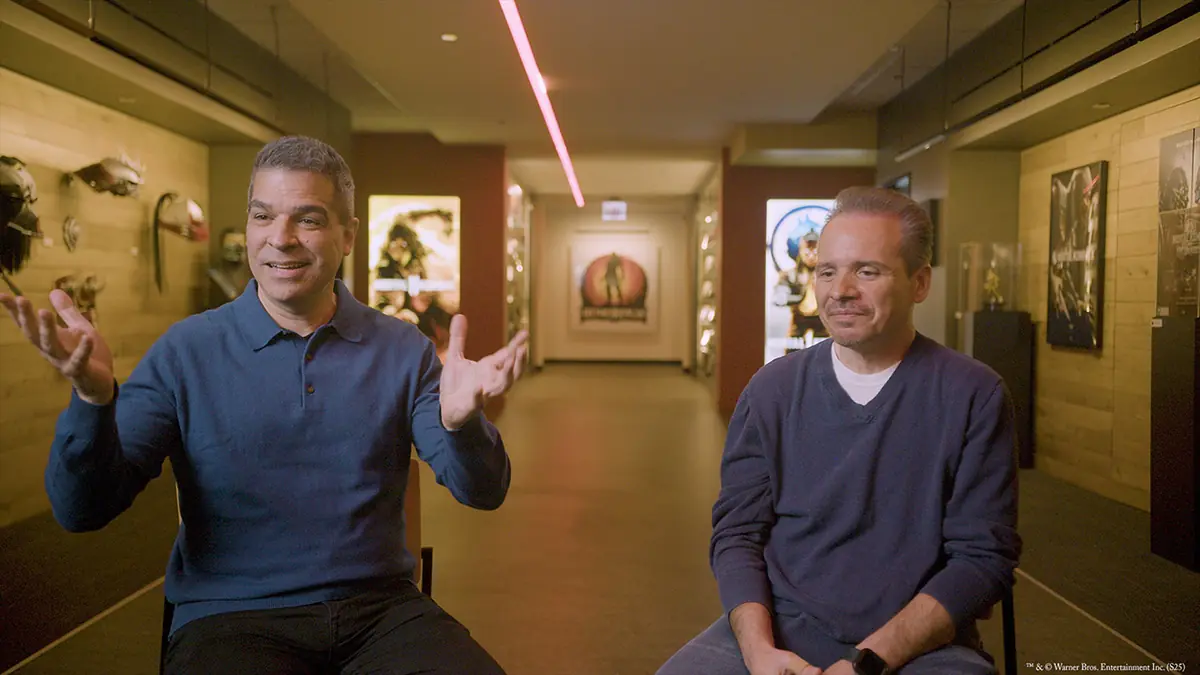
Legacy Kollection fatalities and finishing moves
The finishing-move types the collection tracks, how the official training mode helps, and why a move may not trigger.
Applies to: Finishing moves across the included games
Quick answer
The collection tracks eight finishing-move results as separate achievements: a Fatality, a Stage Fatality, a Babality, a Friendship and an Animality, plus the Toasty! and Frosty! call-outs and a Flawless Victory. Digital Eclipse's updates added a training mode that supports finishing-move practice, and it can skip the versus screen so you can retry a move without replaying the whole match.
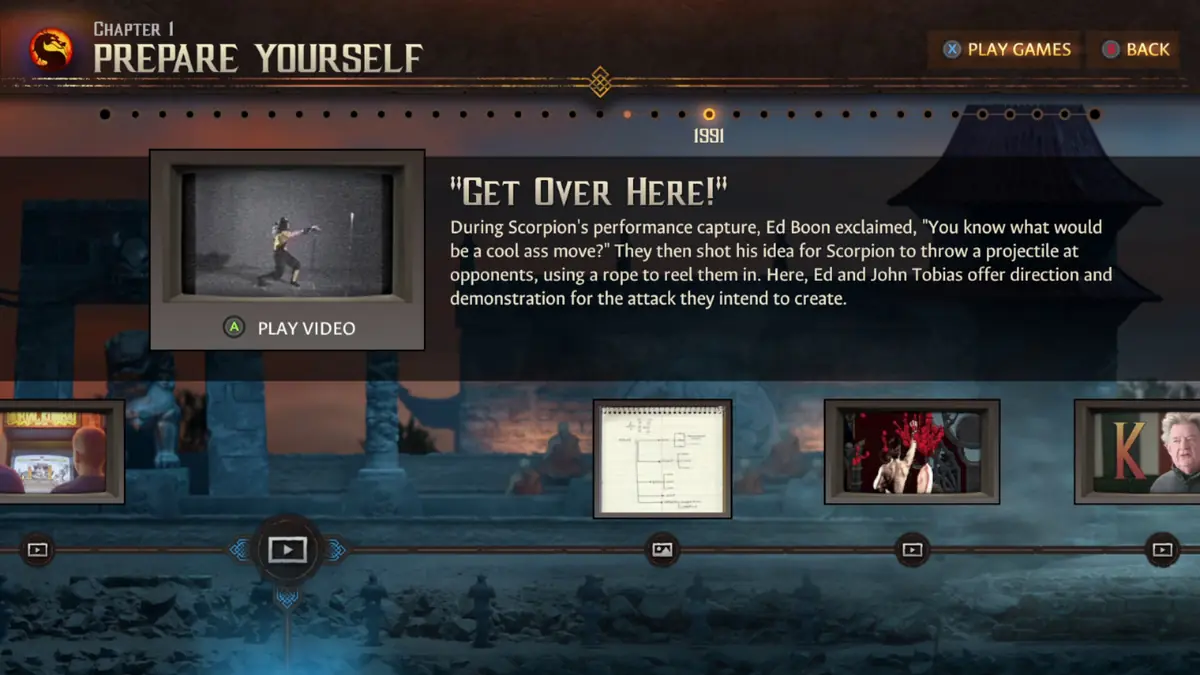
The move types
Mortal Kombat’s finishing moves are not one move with variations. They are distinct categories that were introduced across the early games, and Legacy Kollection recognises each of them separately — which means the collection doubles as a checklist of every type.
| Type | What it is | First appeared in |
|---|---|---|
| Fatality | The standard finishing move. Each character has at least one. | Mortal Kombat (1992) |
| Stage Fatality | A finishing move that uses the stage itself rather than the character’s own animation. | Mortal Kombat (1992) |
| Babality | Turns the defeated opponent into an infant instead of killing them. | Mortal Kombat II |
| Friendship | A deliberately non-violent ending, added as a reaction to criticism of the game’s violence. | Mortal Kombat II |
| Animality | The character transforms into an animal to finish the opponent. | Mortal Kombat 3 |
| “Toasty!” | A sound cue from the announcer, triggered by a specific move. | Mortal Kombat II |
| “Frosty!” | The same idea as Toasty!, triggered under ice-related conditions. | Later revisions of the arcade games |
| Flawless Victory | Winning a round without taking damage, which the games call out separately. | Mortal Kombat (1992) |
The first-appearance column is ordered by the original release of each game rather than by the version in the collection, because a port can ship without a move type the arcade original had.
How they are tracked
Each type maps to its own achievement, so the completion percentages are a straightforward measure of how many players have pulled each one off in the collection.
| Achievement | Requirement | Players who have it |
|---|---|---|
| Finish Him! | Perform a Fatality in an arcade game | 52.6% |
| Flawless Victory | Get a Flawless Victory in any arcade game | 51.6% |
| Toasty! | Trigger the “Toasty!” call-out in an arcade game | 39.4% |
| Read the Room | Perform a Stage Fatality in an arcade game | 35.1% |
| Day Kare | Perform a Babality in an arcade game | 18.3% |
| Kill Them with Kindness | Perform a Friendship in an arcade game | 16.6% |
| Frosty! | Trigger the “Frosty!” call-out in an arcade game | 14.0% |
| Animal Style | Perform an Animality in an arcade game | 8.7% |
The spread is informative. A plain Fatality is done by more than half of all players and is the easiest achievement in the whole collection, while an Animality — which only exists in the later games and needs specific conditions — is done by under a tenth. Babality and Friendship sit in the middle, which reflects how many players know they exist without having looked up the inputs.
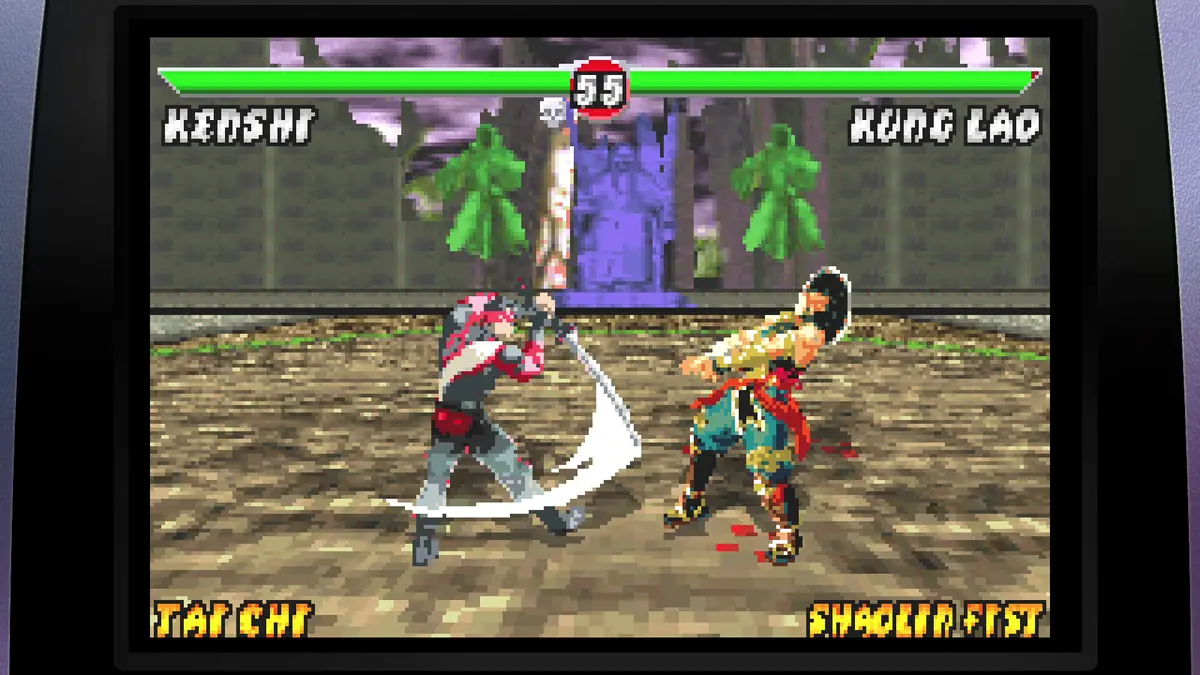
Practising in training
The updates added a training mode that was built with finishing moves in mind, and it removes most of the friction from learning one.
- Finishing moves can be practised directly rather than only in a live match.
- The versus screen can be skipped, so a failed input does not cost you the setup time before every retry.
- The AI difficulty is configurable and sides can be swapped mid-session, which is useful for practising the exact position a move requires.
- Position can be reset with the rewind control, which is faster than walking back into place.
Because finishing moves depend on the opponent being in a particular state and often at a particular distance, being able to reset the situation instantly is the difference between learning a move in a few minutes and giving up on the input.
Controls and remapping
One control change in the collection is worth flagging because it contradicts muscle memory from the original arcade cabinets.
Controls can be reviewed and adjusted per game. Because the same finishing move can require a different input in different versions — and the collection holds both the arcade and home ports of several games — the input is best checked against the version you actually have loaded rather than from memory. The contents page lists which versions are included, and the achievement roadmap groups the finishing-move achievements with the rest of the list.
Sources and review scope
- Steam — Legacy Kollection achievement list — used for the requirement wording and the completion figures for each finishing-move achievement.
- Digital Eclipse — Online Arcade update — used for the training mode features.
- Digital Eclipse — March 2026 update — used for the training-mode rewind reset and the block button change.
- Steam store listing — used for the feature list and the contents summary.
Achievement names, requirements and percentages are quoted from the official Steam achievement list. The section on which game a move type first appeared in reflects the original release order of the titles rather than any one port. Individual character move lists are not reproduced here, because the inputs differ between the versions in the collection and are shown in each game’s own menus.
Checked against linked Digital Eclipse updates, Atari and Steam store listings, and the in-game achievement list on October 13, 2026. Dynamic details such as player counts and patch state should be rechecked before publication.
Not independently play-tested. This is not a claim that every platform or game version was tested. Source review: Oct 13, 2026.
More Mortal Kombat Guides
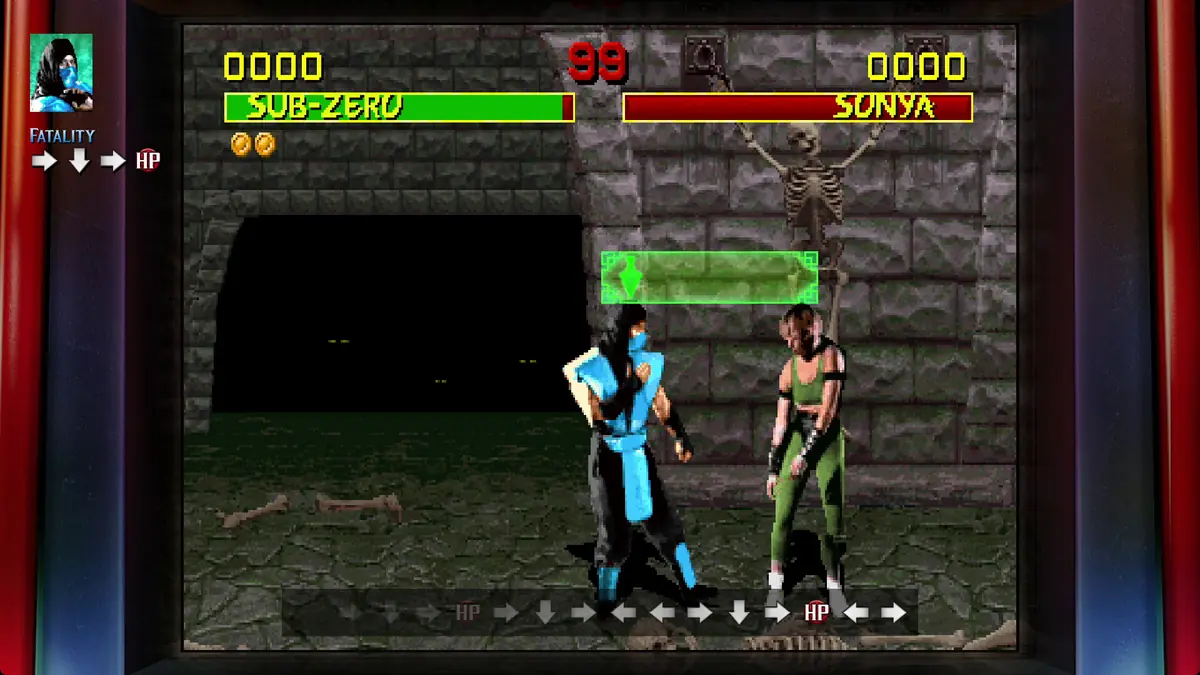 Mortal Kombat
Legacy Kollection hidden characters and unlocks
Which version hides which fighter, the conditions the game itself states, and the official No More Secrets shortcut.
 Mortal Kombat
 hidden characters: the full series list
Secret fighters across the original trilogy and the spin-offs, with the version each one appears in.
 Mortal Kombat
: Legacy Kollection — is it fixed now?
What went wrong at launch, which fixes have shipped since, and what the game is like to play today.
 Mortal Kombat
Legacy Kollection: every game and version included
The full list of games and versions in Mortal Kombat: Legacy Kollection, and which build of each is worth playing.
 Mortal Kombat
Legacy Kollection editions compared: which to buy
Standard, Deluxe and Kollector's Edition side by side, plus the Switch 2 pricing and platform details that change the answer.
 Mortal Kombat
Legacy Kollection online play and crossplay
How to switch on Krossplay, how rooms and Online Arcade work, and which of the included games support online matches.