
WARDOGS Anti-Cheat and Bans: What the Developer Actually Says
Anybrain is named in the privacy policy, Easy Anti-Cheat is explicitly excluded by the EULA, Elytra has no official source, and the appeal process in full.
Applies to: WARDOGS anti-cheat components and enforcement, checked against the enforcement policy, the EULA, the privacy policy and all 81 Steam announcements on October 19, 2026
Quick answer
WARDOGS has a published Security and Enforcement policy dated September 7, 2026. It names no anti-cheat provider, referring only to third-party anti-cheat providers. The only provider the developer names anywhere is Anybrain, described in the Privacy Policy as "our Anybrain anti-cheat software development kit (SDK)". The EULA mentions Easy Anti-Cheat in its general terms but a game-specific addendum states plainly that the game does not use it. Elytra appears in no official document at all — zero hits across the policy, privacy policy, EULA, FAQ and 81 announcements — and the claim comes from a player post. Secure Boot and TPM are not currently required, though the developer reserves the right to introduce them with notice before they take effect. Only permanent bans can be appealed, to [email protected], with a 30-day response target.
At a glance
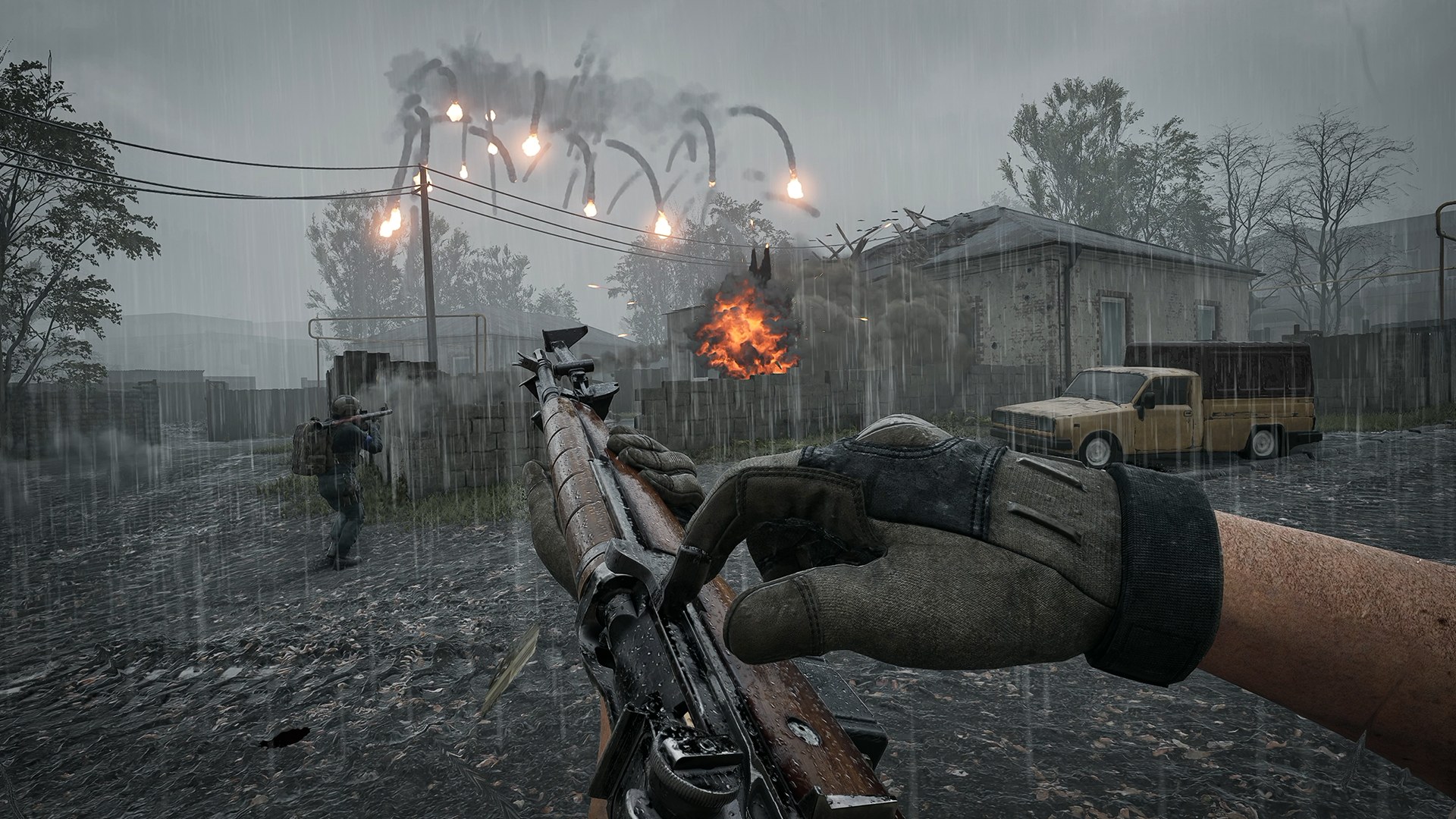
WARDOGS has a dedicated security and enforcement policy, published September 7, 2026, and it is unusually specific for an Early Access shooter: it lists prohibited behaviour, four escalating penalties, and a 30-day appeal target. On the question everyone actually searches — which anti-cheat does it use — the official answer is split across two legal documents and is not what most coverage says.
| Document | Named providers | What it says |
|---|---|---|
| Enforcement policy | None | Refers only to "third-party anti-cheat providers" |
| Privacy Policy | Anybrain | Names "our Anybrain anti-cheat software development kit (SDK)" |
| EULA | Easy Anti-Cheat, as an exclusion | States the game does not use EAC |
The policy itself
The enforcement policy is one page, dated 7 September 2026, and it opens by stating who operates enforcement: "WARDOGS is developed by Bulkhead Limited ('we', 'us'), and we operate its online services, accounts and anti-cheat." It applies to "all online play, on official servers and on community servers alike".
It lists ten categories of prohibited behaviour. Summarised, because the full list is long and the exact wording is what gets enforced:
- Using or installing cheats — aimbots, trigger bots, wallhacks, ESP, radar, recoil or spread modification, no-clip, teleport.
- Modifying, tampering with, patching or repackaging the game's files, executable or memory.
- Macros, scripts or hardware devices that automate inputs or grant an advantage normal play does not allow.
- Interfering with, blocking, spoofing or preventing the anti-cheat software from running.
- Deliberately exploiting bugs, glitches or unintended behaviour — including damage, movement, spawn and progression exploits.
- Win trading, deliberate throwing, boosting, or playing to farm rewards rather than to play.
- Buying, selling, renting or sharing accounts; playing on an account that is not yours.
- Evading a ban, or helping someone else evade one, including through new accounts or spoofed hardware.
- Abuse of other players — harassment, threats, hate speech, doxxing, abusive names — in text and voice chat.
- Abusing the reporting system with deliberately false or coordinated reports.
The policy also warns specifically about paid services: "Steer clear of tutorials and paid services offering unlocks, progression, cosmetics, stat boosts, modified clients or 'undetected' cheats." Enforcement falls on the account that used it, not the seller.
Anybrain: the one name the developer publishes
The Privacy Policy is the only public document where BULKHEAD names an anti-cheat component for this game, and it does so in the middle of a data-collection paragraph:
The same policy lists "Anybrain, S.A." under a heading covering "Anti-cheat, fraud-prevention and security providers", alongside AWS as hosting provider and Steam/Valve as an identity provider.
Two things follow, and they are the reason this section exists rather than a single sentence:
- Anybrain is a named SDK, not the whole system. The policy describes it specifically as capturing keyboard and mouse input telemetry, which is behavioural analysis — the kind of anti-cheat that looks at how you play rather than what files you have loaded.
- It sits beside unnamed tooling. The same sentence refers separately to "integrity and security telemetry captured by our anti-cheat and anti-tampering software", without naming it. So the documented stack is at least two layers, and only one of them has a name attached.
Easy Anti-Cheat: named, then excluded
This is the paragraph that gets misread, so it is worth showing in the order the EULA presents it.
First, the main body of the terms describes a general arrangement across the publisher's catalogue:
On its own, that sentence reads as though WARDOGS uses EAC. It does not, and the EULA says so nine paragraphs later in an addendum written specifically for this title:
The addendum closes by noting the arrangement is not permanent: "The Anti-Cheat Software used in connection with the Game may change, be supplemented or be replaced from time to time." So today's answer is a snapshot, and the EULA reserves the right to make it a stale one.
Why does the general EULA mention EAC at all? Because it is a shared document. The main body also offers an EAC appeal route at easy.ac, which the addendum's exclusion removes for this game — appeals for WARDOGS go to BULKHEAD instead, as described further down.
Elytra: a name with no official source
"Elytra" is widely repeated as WARDOGS' anti-cheat. It appears zero times in every official channel checked for this page: the enforcement policy, the Privacy Policy, the EULA, the pinned FAQ, and all 81 Steam announcements for app 1867240.
Where it does appear is a player post on the Linux compatibility thread, and the post is worth quoting because it shows how the claim is constructed:
That is a player inferring a vendor from behaviour — not a developer statement. The same post makes a second claim that contradicts the EULA directly: it says the game's anti-cheat is EAC and that the studio "just freshly introduced EAC without having its Linux Module configured".
How detection is described
The policy explains the shape of detection without giving the details, and it says explicitly why the details are withheld: "We don't publish the detail of how detection works, and we won't discuss it in individual cases. Telling people how we catch them tells cheat developers how to avoid being caught."
| Method | Policy wording |
|---|---|
| Client and server side detection | "client and server side detection" |
| Process monitoring | "monitoring applications running on your machine during gameplay" |
| Behavioural analysis | "analysing input and gameplay patterns for anomalies" |
| Integrity checks | "validating that the game and your hardware haven't been tampered with" |
| Player reports | "Reports from other players support enforcement too" |
Two procedural details are more useful than the method list. First, some enforcement is automatic: "If the game detects that it has been tampered with, or that cheat software is running, it will refuse to launch or refuse to let you connect." Second, bans that follow behavioural detection get a human look: "where a ban follows behavioural detection rather than a direct cheat detection, a member of our team reviews the evidence before we apply it."
The in-game reporting tool is described as more consequential than players assume: "a pattern of reports against the same player is evidence in its own right." A report can also carry a short extract of recent text chat from that session.
The four enforcement actions
| Action | Reach | Appealable |
|---|---|---|
| Server restriction | One server only | No |
| Temporary suspension | All online play, for a period | No |
| Permanent account ban | All online play; may extend to other BULKHEAD games | Yes |
| Hardware ban | The device, not just the account | No, unless bundled with a permanent ban that is overturned |
The policy is blunt about escalation: "Cheating and tampering are the most serious things on the list above and are the most likely to result in a permanent or hardware ban with no prior warning." A permanent ban is "usually accompanied by a hardware ban".
Hardware bans block the device rather than the account: "Any account signing in from a banned device is blocked from playing online." The length is not disclosed in advance, and the policy offers a way to test it — sign in on that device with an account in good standing and attempt to connect.
The developer can also remove or reset progression, cosmetics and statistics obtained through cheating, and revoke leaderboard placements. That is separate from the EULA's broader right to reset progression, which the season wipe page covers.
Community servers are a genuinely different case and the policy is careful about it: server admins "can kick or ban players from their own servers for any reason", those bans affect that server only, and BULKHEAD "can't overturn them". The reverse is not symmetrical — a developer ban blocks community servers too.
Appeals: what is and is not reviewable
Only permanent account bans can be appealed. Server restrictions, temporary suspensions and hardware bans are final — with one exception: if a hardware ban came alongside a permanent ban and the permanent ban is overturned, both are lifted.
| Element | Detail |
|---|---|
| Who can appeal | Permanent account bans only |
| How | Email [email protected] with your account name and platform |
| Who reviews | "A member of our team, not an automated system" |
| Response target | Within 30 days |
| What you are told | The outcome — but not the detection evidence or how detection worked |
| If overturned | Account and removed progression are restored |
| Repeat appeals | "Submitting repeat appeals for the same ban won't get it looked at again" |
There is a second, separate route that most players never find: if you are in the UK or EU and want a decision reviewed on data-protection grounds rather than as a ban appeal, the policy directs you to [email protected]. That is a different question with a different reviewer, and it is the only route not closed off by the "appeal decisions are final" line.
Secure Boot, TPM, and what might change
This is the paragraph with the most practical value for anyone building or buying a PC, and it is unusually clear about both the present and the future:
Read carefully, that is three commitments in one sentence: no requirement today, no promise it stays that way, and a notification obligation before any change takes effect. The third is the one worth holding onto — it means a silent requirement change would contradict the policy.
It also explains the Linux situation from the other direction. Software-level anti-cheat can run under Proton; hardware-attestation requirements generally cannot. So the "not required today" line is the reason the Linux conversation is not closed, and the "may introduce at any time" clause is the reason it is not settled either.
Sources and review scope
- BULKHEAD — Security and Enforcement, updated September 7, 2026 — the primary source: prohibited behaviour, detection descriptions, the four enforcement actions, the appeal process, the community-server distinction, and the Secure Boot / TPM statement.
- BULKHEAD — End User Licence Terms — source for the general EAC clause and, critically, the game-specific addendum stating that WARDOGS does not use Easy Anti-Cheat.
- BULKHEAD — Privacy Policy — the only source naming Anybrain, both as "our Anybrain anti-cheat software development kit (SDK)" and as "Anybrain, S.A." in the provider list.
- Steam Discussions — WARDOGS Linux compatibility thread — used only to document that the Elytra claim comes from players, not the developer. No technical claim from that thread is repeated as fact.
- All 81 Steam announcements for app 1867240 — searched for "Elytra" and for anti-cheat component names. Zero hits for Elytra.
Every statement about what the game uses is attributed to a specific official document, and where those documents disagree — as they do on EAC — the disagreement is shown rather than resolved. The Elytra section exists because the claim is popular and unsourced; naming it as a player inference is more useful than either repeating it or ignoring it. This site does not provide cheats, does not review cheat software, and does not link to any service that sells them.
Checked on October 19, 2026 against the Steam store listing and the Steam Web API for app 1867240, the developer's own Steam announcements including the Season 2 patch notes dated October 14, 2026, the current-player and achievement endpoints, the public review endpoint, and the four policy pages published on wardogs.com. Figures are quoted from those sources rather than paraphrased, and each one carries the date it was read. Where a detail comes from a press report, a third-party site or a player post rather than from BULKHEAD or Team17, it is labelled as exactly that. Anything the developer has not stated is written as unconfirmed rather than guessed.
Not independently play-tested. This is not a claim that every platform or game version was tested. Source review: Oct 19, 2026.
More WARDOGS Guides
 WARDOGS
 Price and Editions: Standard, Supporter Edition and What Each Contains
The two packages on Steam, what the Supporter Pack adds, what the game does not sell, and the developer statement about monetisation during Early Access.
 WARDOGS
 Platforms: Windows Now, Consoles in 2028, Linux Not Supported
The confirmed platform list, the 2028 console window stated by the developer, the Linux and Proton position, and the 14 supported languages.
 WARDOGS
 Launch Errors: WD-L020 and the Official Fix Record
WD-L020 is a Windows 11 crash error the developer patched in update 0.1.2. WD-L014 has never been defined by the developer — here is what that means and what is actually confirmed.
 WARDOGS
 System Requirements and Engine: Full Official Specs
The complete minimum and recommended specs from Steam, including the Windows 10 floor, the 50 GB figure and the upscaling assumption, plus the engine the developer actually uses.
 WARDOGS
How WARDOGS Works: Control Zones, Scoring and Match Length
The three teams, the 2x2km Control Zone, how points are actually earned, what the Hot Zone doubles, and why the developer has never published an average match length.
 WARDOGS
 Player Count and Sales: The Official Milestones
The live concurrent player figure read from Steam, the three sales milestones BULKHEAD announced, and why the review count and the sales figure measure different things.